
Modular Storage
Aluminium Modular Kitchen
The kitchen is the one room in the house where wood-carcass cabinetry meets water, heat and daily wear all at once. An aluminium frame under the sink and around the stove doesn't swell, doesn't rot, and doesn't feed termites — the same case as an aluminium wardrobe, made sharper by what a kitchen actually does to cabinetry.
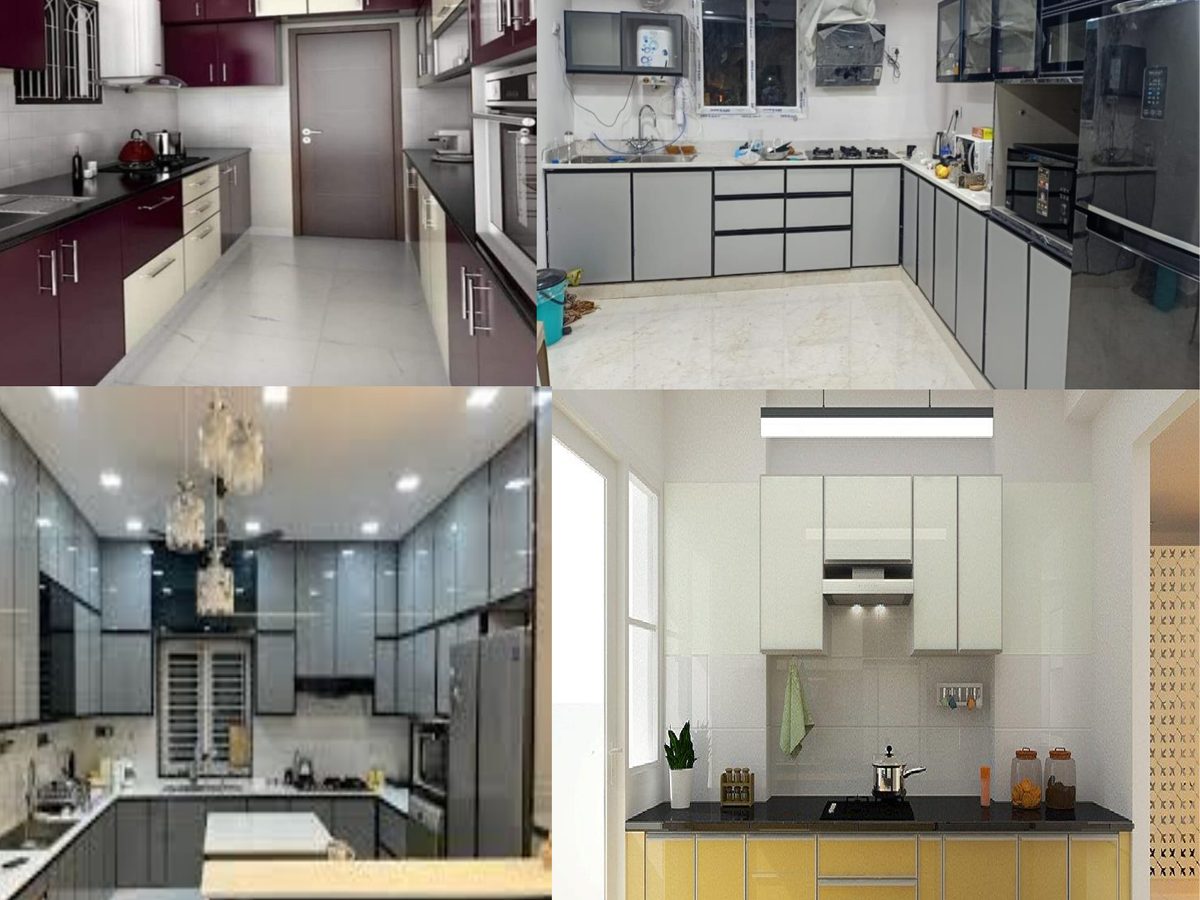
What matters about this product
- Handles the sink zone.
- The base unit under the sink is the first place a wood carcass fails — aluminium doesn't swell or delaminate from repeated water exposure.
- Doesn't warp near heat.
- Cabinetry near the stove and chimney sees more heat cycling than anywhere else in the house; aluminium holds its shape through it.
- Termite and pest resistant.
- No termite risk in the carcass, unlike particle board or ply in a kitchen's often-humid conditions.
- Low maintenance surface.
- Wipes clean without repolishing or resealing — relevant in a room that gets used, and gets greasy, daily.
- Modular configuration.
- Base, wall and tall units configure to the kitchen layout, same as any modular system — the aluminium is inside the carcass, not a constraint on the layout.
- Lighter wall-mounted units.
- Aluminium-carcass wall cabinets put less load on the wall fixing than an equivalent wood carcass.
- Finish is a separate choice from the frame.
- Shutters in laminate, acrylic, lacquered or glass finish — pick the look independent of the aluminium structure underneath.
- Scratches and dents don't sand out.
- Unlike a wood veneer that can be touched up on site, a dented aluminium panel is usually a panel replacement — worth knowing before a heavy pot gets dropped on an open shutter.
Specifications
- Carcass
- Aluminium frame
- Shutter options
- Laminate, acrylic, lacquered, glass
- Configuration
- Base, wall and tall units, project-specific layout
- Typical use
- Kitchens, utility/wash areas
Questions people actually ask
Why does the carcass material matter more in a kitchen than elsewhere in the house?
The sink base sees constant water exposure and the units near the stove see heat cycling — the two conditions that break down a wood-based carcass fastest. Aluminium doesn't swell, warp or delaminate under either.
Can a scratched or dented panel be repaired on site?
Not the way a wood veneer can be sanded and touched up — a damaged aluminium shutter panel is usually replaced rather than repaired. Worth factoring in for a busy kitchen.
Does the aluminium frame limit the kitchen layout or look?
No — the frame is structural and mostly unseen; the shutter finish (laminate, acrylic, glass, lacquer) is a separate choice, and the layout follows the same base/wall/tall modular logic as any kitchen system.
Is it more expensive than a standard plywood modular kitchen?
Broadly comparable upfront. The advantage plays out over the kitchen's life, in avoided swelling, termite damage and heat-related warping around the wet and hot zones.
Related products
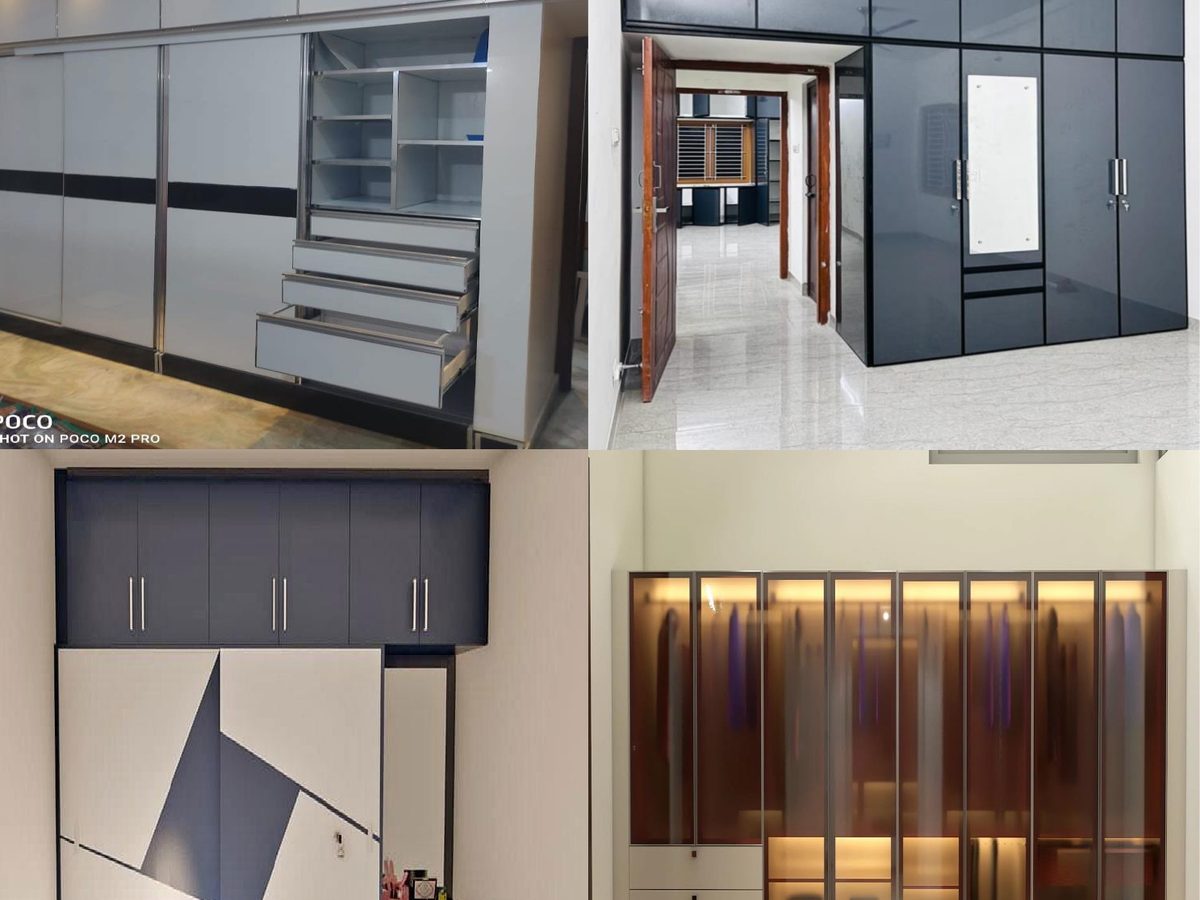
Aluminium & Glass Wardrobes
Aluminium-frame wardrobes for Lucknow homes — termite-proof and moisture-resistant where a monsoon humid season punishes wood.
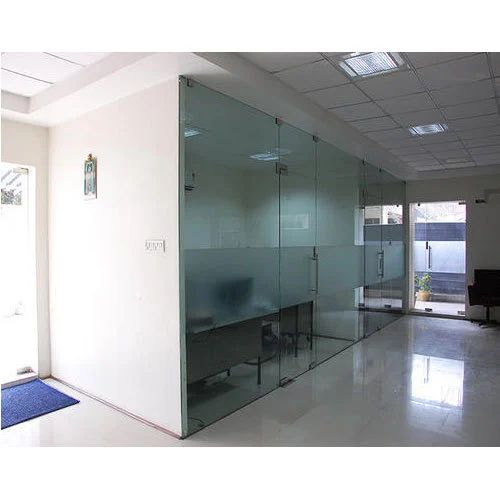
Toughened Glass Works
Toughened safety glass fabrication for Lucknow doors, railings and partitions — heat-strengthened for impact safety.

Custom Fabrication
Bespoke aluminium, MS and SS fabrication for Lucknow projects that don't fit a standard catalogue item.