Materials Reference
Glass, panels, hardware & finish.
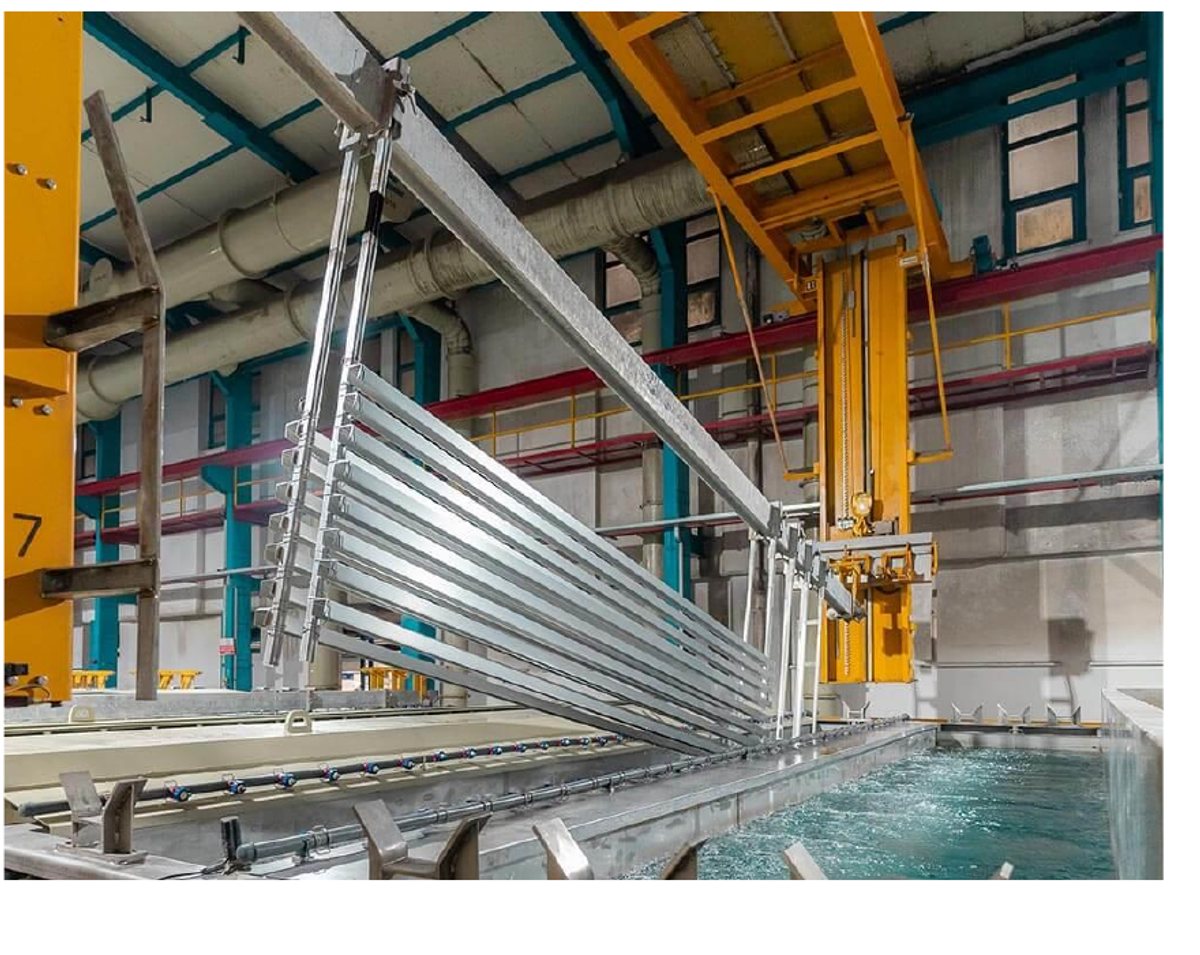
What actually goes into a Gopalsons product, stocked through New Indira Steels — including the in-house powder coating and anodizing most fabricators send out.
Glass thickness
Eight gauges stocked, from Saint-Gobain and AIS (Asahi India Glass).
3.5mm — Small-pane wardrobe shutters and cabinet doors · 4mm — Light partitions and mirror work · 5mm — Window shutters, standard glazing · 6mm — Sliding and casement window panels, balustrade infill · 8mm — Larger door panels, toughened railings · 10mm — Frameless doors, structural glazing panels · 12mm — Heavy frameless doors, glass railings without a top rail · 24mm — DGU (double-glazed unit) build-up for acoustic and thermal performance
Glass types
Brands stocked: Saint-Gobain and AIS (Asahi India Glass).
Toughened
Heat-treated for impact resistance; breaks into blunt granules rather than shards. The default for doors, railings and any pane at hand height.
Laminated / security
Two or more panes bonded around a plastic interlayer. Holds together on impact instead of falling out — used where a broken pane still needs to stay in the frame.
DGU (double glazed)
Two panes sealed around an air or argon gap. Cuts heat transfer and outside noise; the thickness trade-off is a deeper frame section.
Tinted / reflective
Body-tinted or coated to cut glare and solar heat gain. Reduces visible light too, which is the trade-off on north-facing openings that need daylight.
Patterned / fluted
Textured surface that scatters light for privacy without full opacity. Common in bathroom windows and screens.
Frosted / etched
Acid-etched or sandblasted for a translucent, private finish. Shows fingerprints more than clear glass.
Printed / painted
Ceramic frit or back-painted colour fused to the surface. Opaque and used for spandrel panels and kitchen splashbacks.
Lacquered
Painted glass in solid colours, typically back-mounted. A common cladding and cabinetry finish.
Mirror
Silvered glass for wardrobe shutters and decorative panels.
Panel options
ACP (Aluminium Composite Panel)
Two thin aluminium skins bonded to a core; light, flat and fast to install on facades.
HPL (High Pressure Laminate)
Dense compressed-fibre panel, more impact-resistant than ACP, used where the cladding will be touched or knocked.
Metal grills
Decorative and security screening in worked metal.
Mosquito mesh
Fixed or retractable insect screening, including the pleated mesh system.
Wooden boards
Engineered, particle board, plywood, MDF and HDHMR options for cabinetry carcasses.
Acrylic / plastic sheets
Lightweight, impact-resistant alternative to glass for signage and light diffusion.
Brand Partner
ACP & HPL brands we stock
Sheet is sourced from named manufacturers, not an unbranded generic — Imperia Decor, Citybond, Allwin, Alstone.
Imperia Decor
The ACP brand we carry the fullest range of. Imperia manufactures its own panels — Gopalsons and New Indira Steels stock and fit them, and aren't the manufacturer.
Series available
Panel specification
- Panel thickness
- 1mm – 6mm
- Skin thickness
- Up to 0.5mm
- Standard panel sizes
- 1220×3660mm · 1220×3050mm · 1200×2440mm
- Width upon request
- Up to 1525mm
- Warranty
- Up to 10 years, depending on skin thickness
Hardware
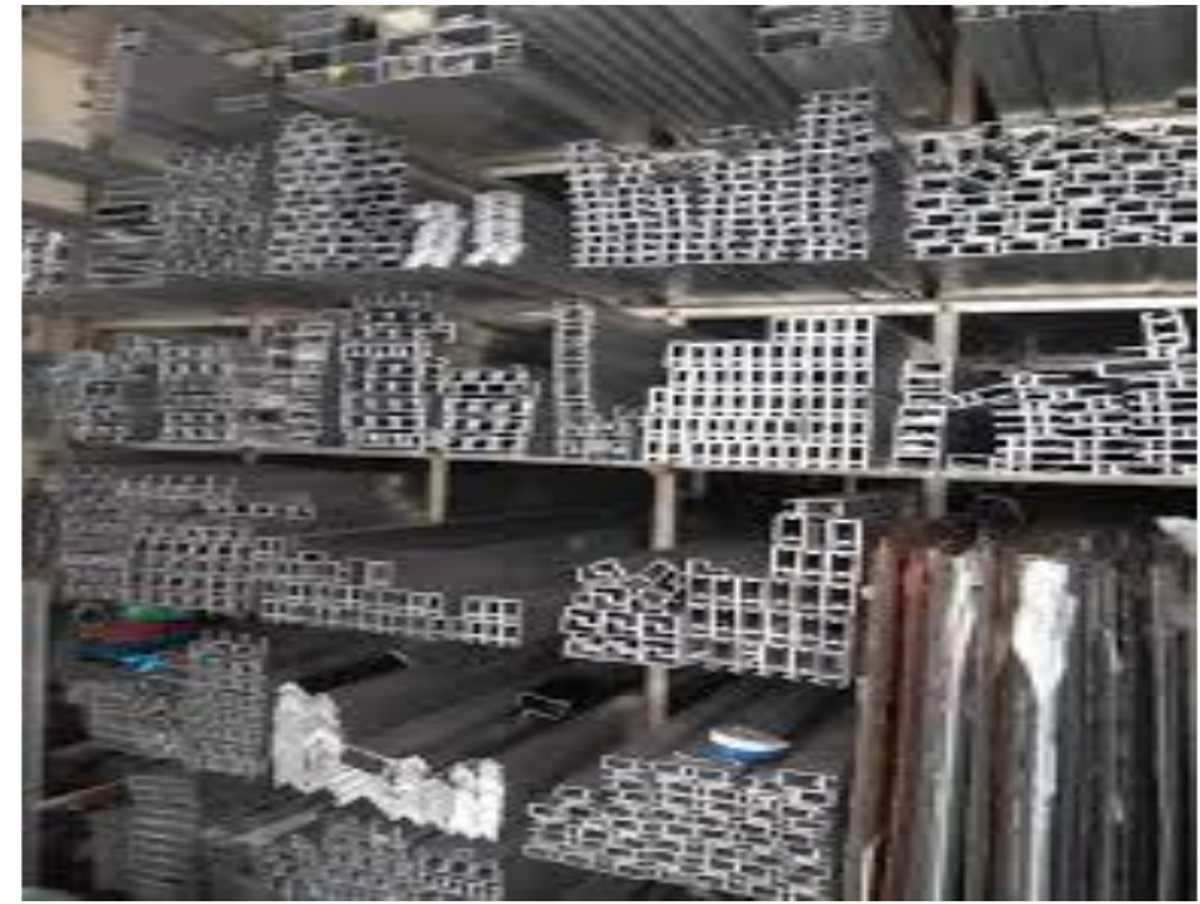
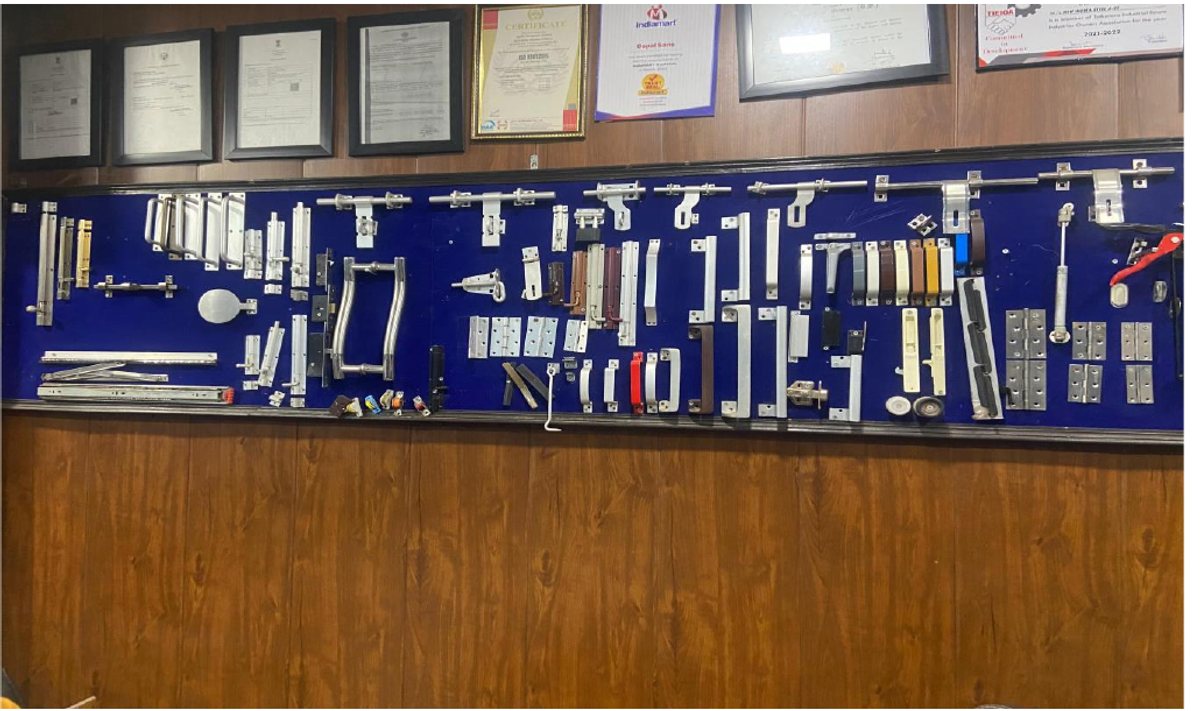
In-House at New Indira Steels · Est. 1988
Powder coating & anodizing.
Most fabricators send their coating out to a third party. New Indira Steels has run it in-house since 1988, ISO 9001:2015 certified — the same accountable chain from extrusion to finish.
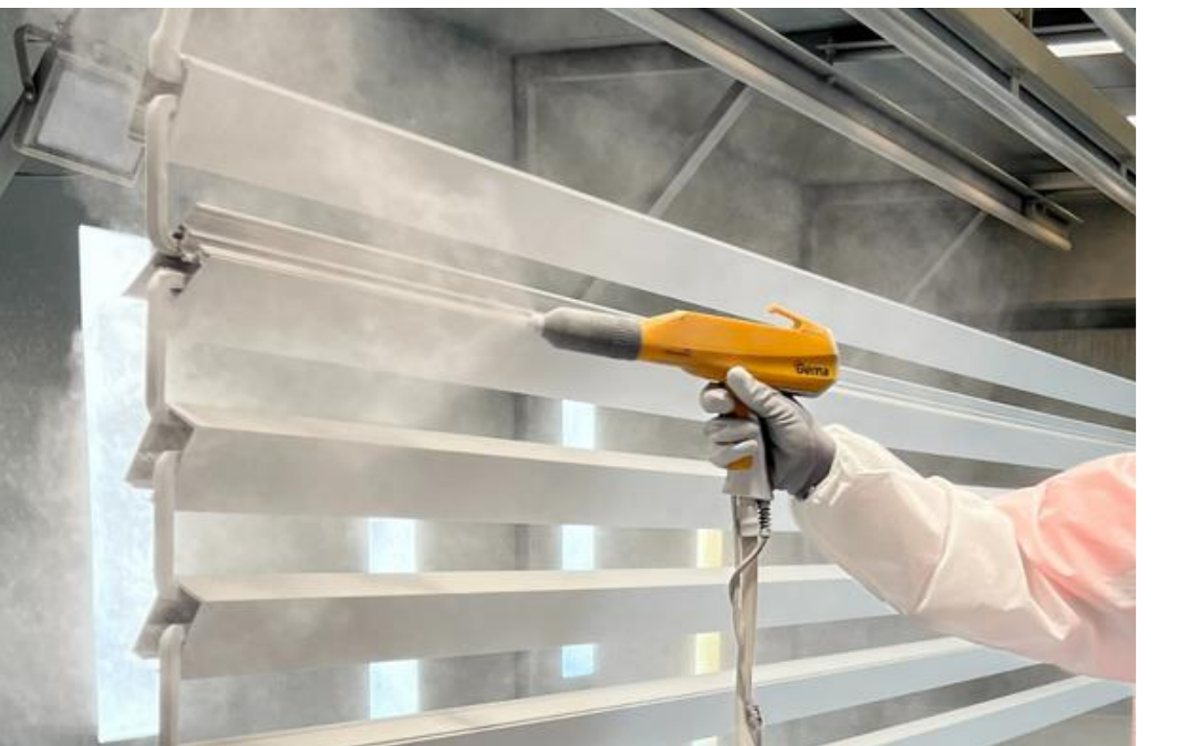
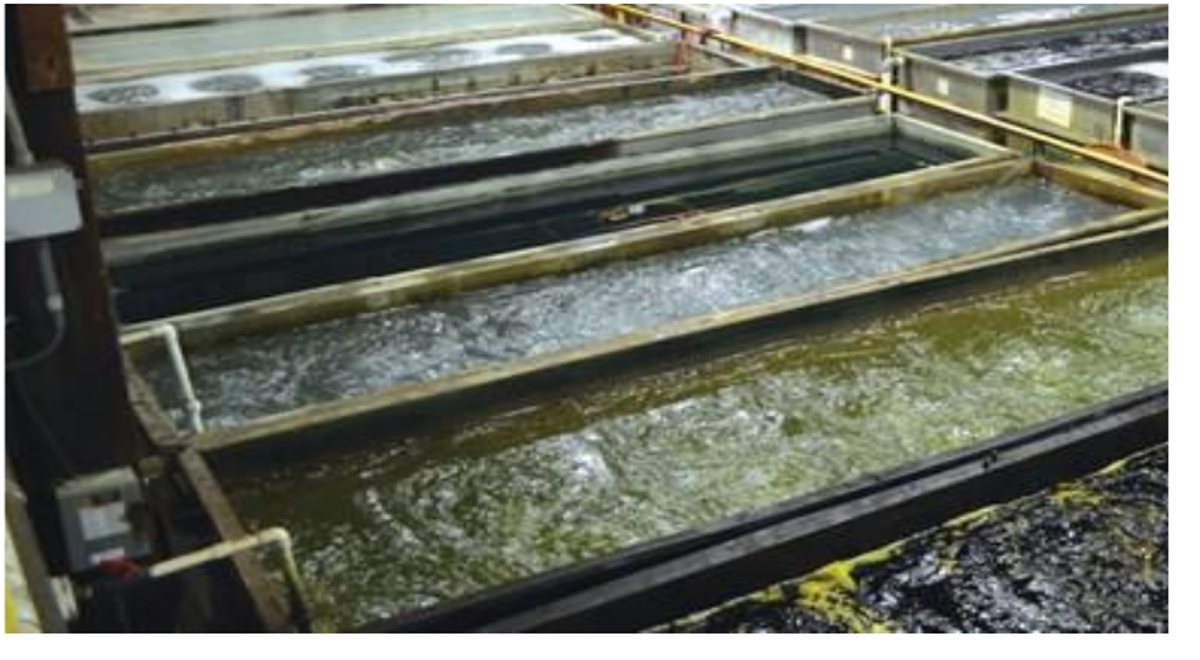
Pre-treatment, before the coat ever goes on
This is the step that actually determines how well a coat adheres and how long it lasts — not the powder itself.
Mild steel
- Acid washRemoves contaminants for a clean surface.
- DerustingEliminates corrosion, ensuring a smooth base.
- PhosphatingEnhances adhesion and provides corrosion resistance.
Aluminium
- DegreasingEffectively cleans the surface of oils and residues.
- ChromatingImproves corrosion resistance and prepares the surface for a superior finish.
Finish options
Finish families
Glossy
High-sheen, reflective coat. The widest colour range on the card.
Semi-glossy
Softer reflection than full gloss, hides minor surface marks better.
Satin
Low-sheen finish between semi-glossy and matt.
Semi-matt
Close to flat with a faint sheen.
Matt
Flat, non-reflective finish. Shows fingerprints least.
Structuretextured
Fine surface relief that scatters light and hides handling marks — a common choice for window frames.
Texturetextured
Coarser relief than Structure, more tactile.
Wrinkletextured
Deliberately crinkled surface, high hide on dents and welds.
Metallic & specialtextured
Metal-flake and mirror-effect coats. Needs the physical card — screens cannot render the sparkle.
Pure polyester
The exterior-grade chemistry — better UV and weather hold than standard epoxy-polyester, for anything facing the sun and rain.
RAL shades
Shades matched to the RAL European colour standard, for specs that call out a RAL code directly.
Chemistry
- Epoxy-polyesterInterior use — hardware, partitions, indoor railings. Not rated for continuous UV exposure.
- Pure polyesterExterior use — window and door frames, facades, gates. Holds colour and gloss under sun and rain.
Anodizing shades
Anodizing is an electrochemical process that thickens and hardens aluminium's own natural oxide layer, rather than adding a separate coating on top of it. That's why it holds up differently to powder coating: the finish is part of the metal itself, so it resists wear and corrosion well, but it can't match powder coating's colour range since it works with aluminium's natural tones rather than pigment.